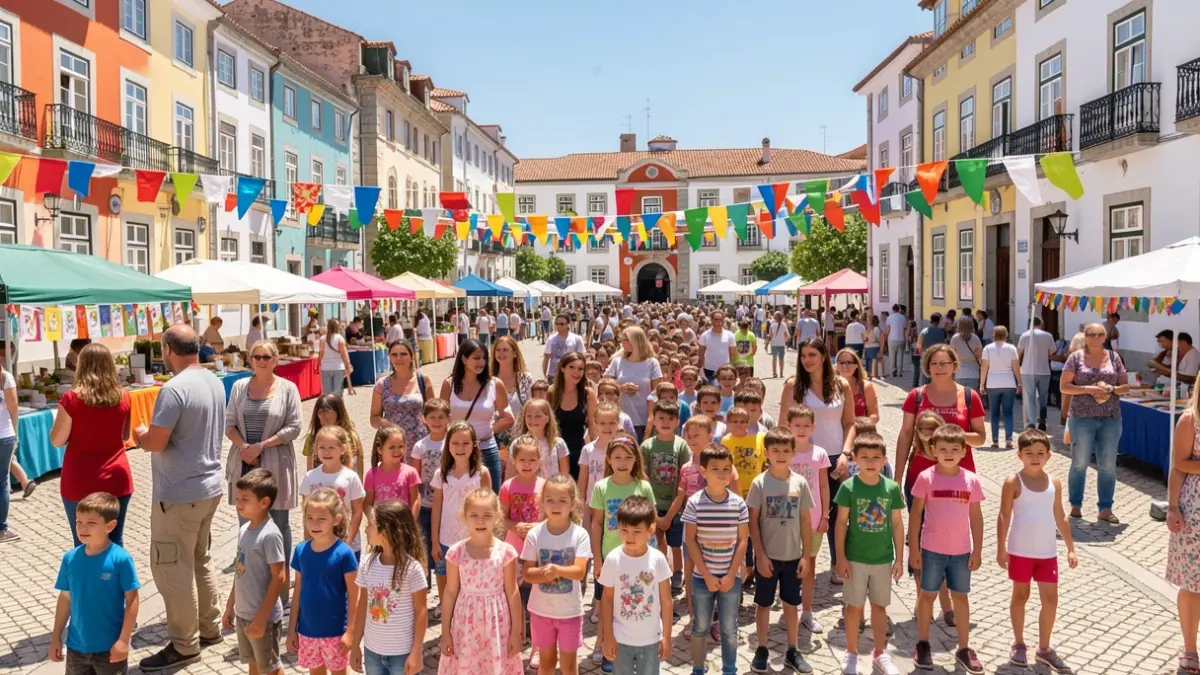
The initiative, held in Funchal, featured a diverse program of educational activities, exhibitions, debates, workshops, and a youth fair. The event concluded with the conference “This Child: Challenges and Good Practices,” at the Funchal Cultural and Research Centre (CCIF), bringing together professionals and representatives from various entities involved in promoting and protecting the rights of children and young people.
At the opening session, the councilor for Youth, Education, and Health, Helena Leal, highlighted the importance of networking and inter-institutional coordination to ensure the realization of children's rights, emphasizing that this is a responsibility to be shared by the entire community. She reaffirmed the Municipality's commitment, as an Educating City and a Child-Friendly City, to promoting the well-being and rights of children through the implementation of the Local Strategy for Children's Rights 2024-2027.
During the conference, Helena Leal presented the Local Strategy for Children's Rights Brochure, aimed at children aged 6 to 10. The goal is to inform them about their rights using simple and accessible language, value their voices, and encourage active participation in building a more inclusive, safe, and child-friendly city. The brochure includes a participation section that challenges youngsters to suggest ideas for making Funchal even more child-friendly and to imagine what they would change if they were Mayor for a day.
The brochure translates the five fundamental axes of the Local Strategy into five “superpowers”: Non-Discrimination, Participation, Access to Quality Services, Protection and Family Environment, Play and Leisure. The Local Strategy for Children's Rights was developed through a participatory process involving around 700 children and young people, integrating their opinions and proposals into the definition of municipal priorities. The plan includes five strategic axes, 38 objectives, and 120 measures and actions, currently at 98% execution.
The conference featured several panels dedicated to topics such as the best interests of the child in judicial practice, the fundamental right to child health, and public health challenges.