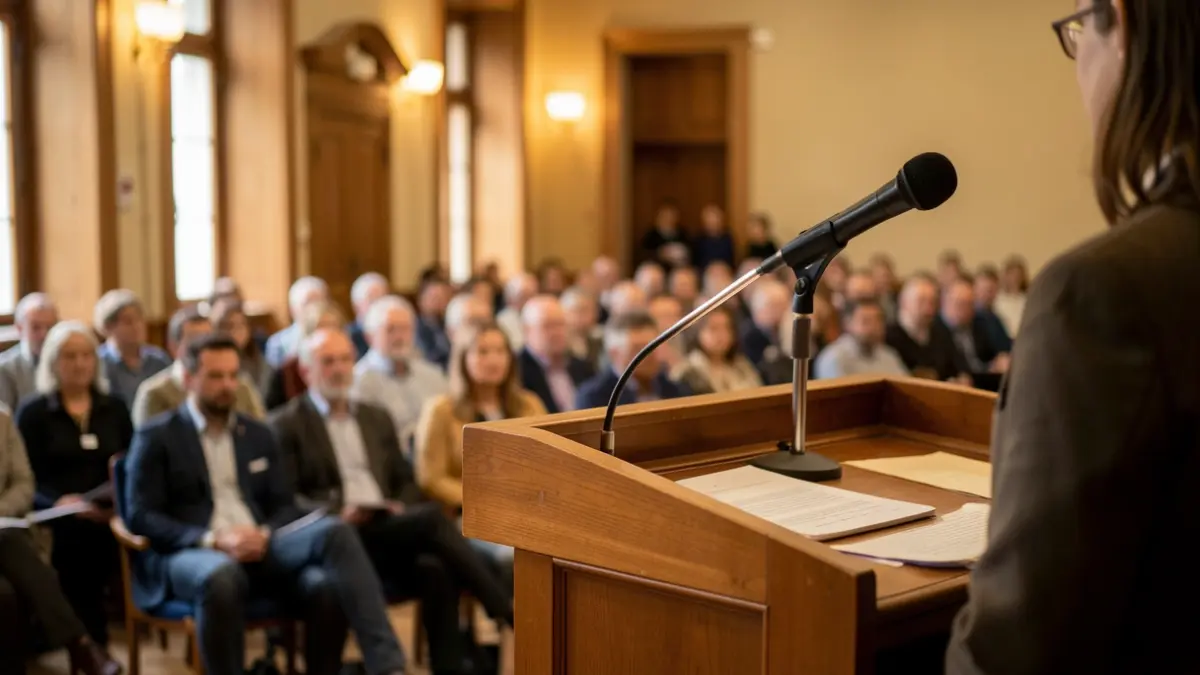
The winning projects and honorable mentions of the Research Impact Narratives Award 2026 were announced on November 18, during the NOVA Science and Innovation Day, recognizing narratives that demonstrate the impact of research developed at the NOVA University of Lisbon.
Among the winning projects are narratives such as “Say it out loud: How breaking a taboo helped girls learn in Madagascar”, with principal investigator Duncan Webb from the Faculty of Economics | Nova School of Business and Economics; “New energy services, old consumer rules: The research behind Europe’s plan to protect energy”, by principal investigator Lucila de Almeida from the Faculty of Law | NOVA School of Law / CEDIS; and “No farmer left behind: How a digital community of practice is changing the way Portugal shares agricultural knowledge”, by principal investigator Miguel de Castro Neto from ISEGI | NOVA IMS / MagIC.
Also recognized were the projects “Never too late: Helping unemployed adults over 50 design what comes next”, by principal investigator Radek Oros from the Faculty of Economics | Nova School of Business and Economics, and “Scaling social prescribing in Portugal: Connecting health, communities and people”, by principal investigator Sónia Dias from the National School of Public Health | CHRC.
In the Honorable Mentions 2026 category, projects such as “Can we tailor a common painkiller to help fight colorectal cancer?” by Ana Rita Duarte (NOVA FCT | LAQV-REQUIMTE); “When neighbours fight floods together: Lessons from Quelimane” by Caroline Miehe (Faculty of Economics | Nova SBE/ NOVAFRICA); and “Making Portugal’s Social Sector Visible: How shared data is helping organisations care better” by Leid Zejnilovic (Faculty of Economics | Nova SBEconomics / DOT KC) were recognized.
Honorable mentions were also awarded to “Swimmer’s itch reaches Portugal: What snails in Alqueva reveal about climate and health” by Maria Manuela Calado (IHMT NOVA / GHTM); “Digging for new antimicrobials in the soils of Oeiras” by Pedro Matos Pereira (ITQB NOVA / MOSTMICRO); and “Virtual travel before cinema: Bringing the 19th century cosmorama back to life” by Susana S. Martins (NOVA FCSH / IHA / IN2PAST).
The projects recognized in this edition join the winning narratives from previous editions, demonstrating how the knowledge produced at the University contributes to addressing societal challenges.