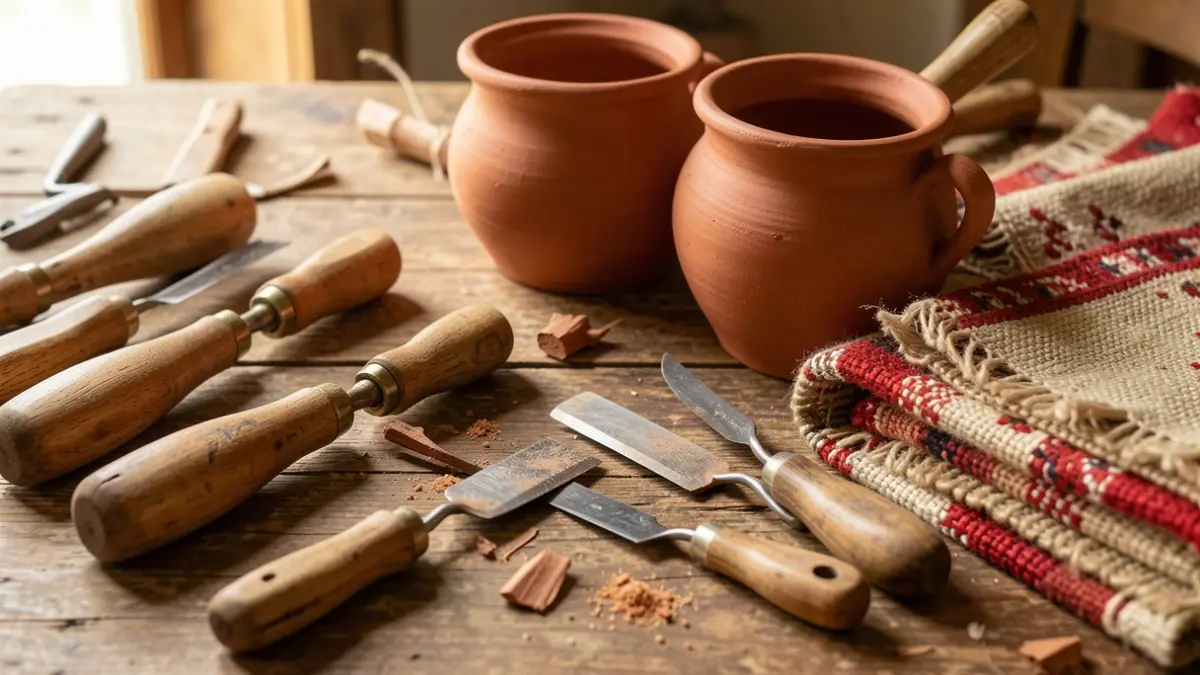
The proposal defines priorities for the safeguarding, transmission, valorization, and sustainability of the sector, recognizing know-how as living cultural heritage, inseparable from the people who preserve it, the raw materials used, and the territories where they live.
The Minister of Culture, Youth and Sport highlighted that "traditional arts and crafts are a manifestation of our collective identity whose future is not guaranteed." The strategy seeks to support continuity and spark interest among new generations.
Priorities include the valorization and fair remuneration of artisanal work, sustainable access to raw materials, knowledge transmission, creation and experimentation, and the protection of traditional practices at risk of disappearing.
This initiative continues the framework established in 2020 and the National Program Saber Fazer Portugal, reinforcing territorial intervention and results-oriented approaches. The Program will be the main implementation instrument, in coordination with the Portuguese Saber Fazer Network.
Contributions can be submitted through the Participa.gov.pt platform until December 31.