On October 6th, Ostomy Patient Day is commemorated. The Amadora/Sintra Local Health Unit (ULS) highlights the role of all professionals who support ostomized patients and all individuals and families who place their trust in their teams to live better with this condition.
The ULS Amadora/Sintra has had a Stomatherapy Nursing Consultation since 2011, with a team of extensive experience and specialized training, accompanying ostomy patients from diagnosis to reintegration into daily life.
The nursing team's intervention is crucial at all stages. Before surgery, the preoperative consultation facilitates subsequent adaptation, allowing for information, clarification of doubts, and initiation of emotional preparation. The team's prior marking of the stoma site results in fewer complications and better adaptation to devices.
After surgery, during the first post-discharge consultation, the team assesses the patient, the stoma, and the peri-stomal skin, continuing a progressive teaching process that involves the family caregiver. During follow-up, self-care is reassessed, the device is adjusted, and new needs are addressed.
Continuity of care is ensured through referral to primary healthcare services, prepared with the patient and coordinated with the Stomatherapy Nursing Consultation of the primary healthcare services in Amadora.
It is estimated that there are between 800 to 900 people with ostomies in the ULS Amadora/Sintra area. Annually, 150 to 200 people undergo an elimination ostomy (intestinal or urinary), and approximately 500 people are currently followed by the Stomatherapy Nursing team.
Undergoing ostomy surgery is a life event with a profound impact on physical integrity, body image, and psychosocial roles. It is a health-illness transition requiring new knowledge, skills, and adjustments in all life dimensions.
The word 'stoma' comes from the Greek 'stoma', meaning opening or mouth. Having a stoma means a surgical opening has been created for a vital function: breathing (tracheostomy), feeding (gastrostomy), urinating (urostomy or nephrostomy), or defecating (ileostomy or colostomy). Care varies with the type of ostomy, requiring specific knowledge and practical skills.
At ULS Amadora/Sintra, elimination ostomies are the most frequent, but care also extends to feeding and respiratory ostomies. Most elimination ostomies are reversible. For many, an ostomy is a second chance, and with time, most adapt, leading to true stories of overcoming challenges.
Specialized nursing care translates into measurable gains such as increased autonomy, fewer complications, and improved quality of life. It also has an economic impact, reducing emergency visits, readmissions, and unnecessary consumption of medical devices.
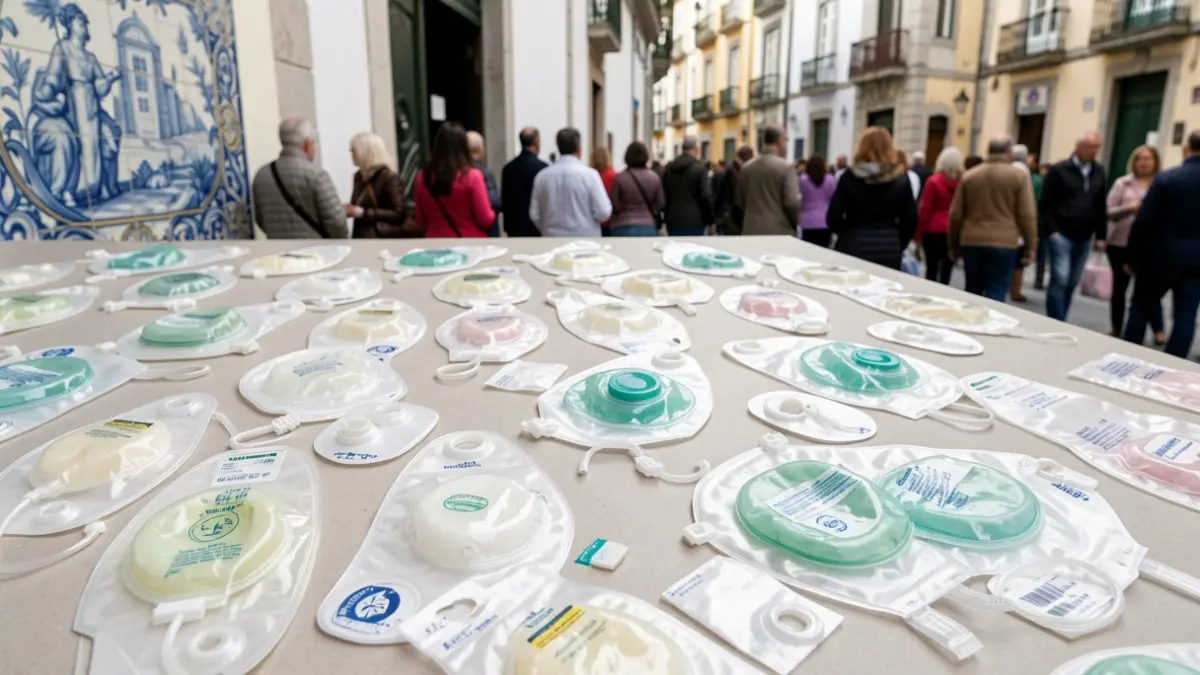
To mark the day, the team presented a piece of art made with ostomy devices. Each 'bag' represents a real patient followed in consultation, with a phrase taken from a conversation. The question 'Me too. And you?' reminds us that an ostomy does not define a person, who enjoys life like anyone else.