In response to isolation in territories with dispersed communities, projects like the online reading club “A Ler com a RIBAA” (Intermunicipal Library Network of Alto Alentejo) have brought the population of the municipalities closer to books. The project promotes annual online meetings where readers can interact with authors, helping to break isolation.
Ana Luísa Lucas, a librarian from the Municipality of Gavião, highlighted that while physical clubs foster a sense of belonging, online clubs promote greater connection among the communities of the 15 involved municipalities, despite physical distances.
Vitória Medalhas, municipal librarian of Monforte, explained that the limitation of distance was transformed into an opportunity through the online club, with the support of the Intermunicipal Community of Alto Alentejo, which provides the Zoom platform. She considers digital tools essential for inclusion and stimulating active reader participation.
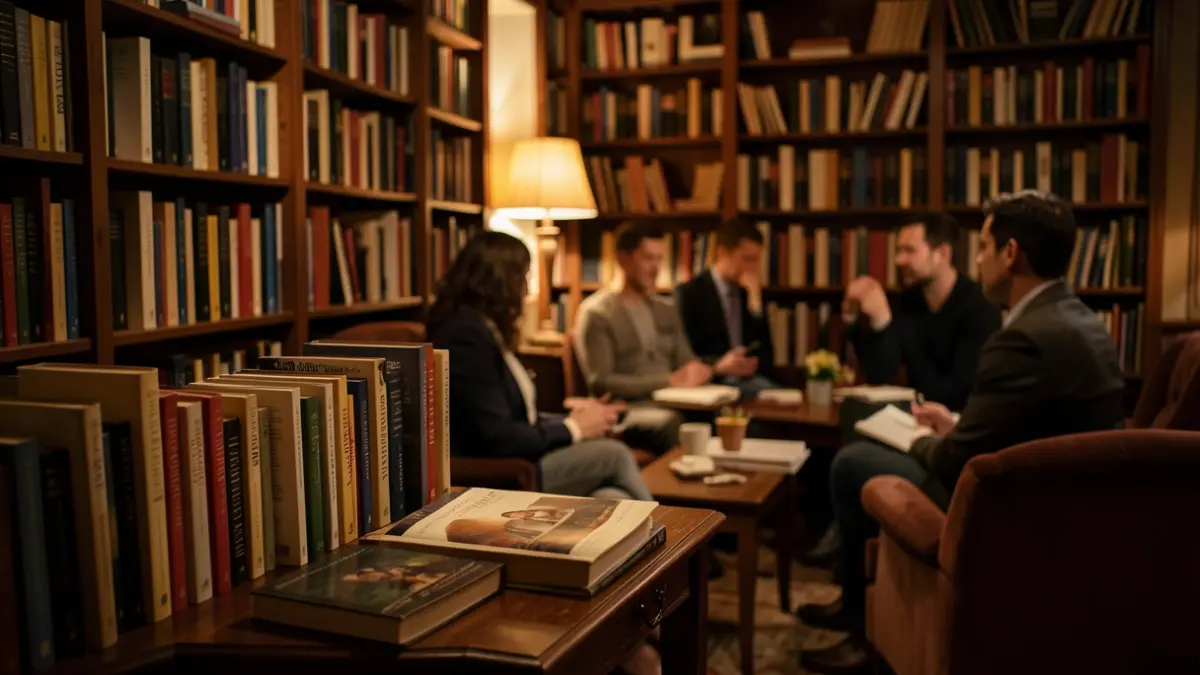
Despite the lack of physical contact with books, online clubs succeed in uniting people, making them active participants. The main difference from physical clubs, according to Ana Luísa Lucas, is that the latter are always available, while online access may depend on Internet availability. Monforte, with three thousand inhabitants, also maintains a physical club of 12 years, attracting about 20 readers with a regular attendance of 10. Exchanges with a club in Badajoz, Spain, have increased the number of readers.
During the Covid-19 pandemic, the Colo project, from the Intermunicipal Library Network of Oeste, was created in 2020 to combat social isolation. Tânia Camilo, coordinator of the Cadaval Municipal Library, and Aida Reis, coordinator of the Caldas da Rainha Municipal Library, explained that the project aims to enhance the proximity between readers and books. The online community has no borders, welcoming participants from Portugal, the United States, and London.
Colo allows for sharing ideas, knowledge, and book exchanges, broadening horizons. However, advance promotion of themes and authors can be a challenge. Although the starting point is always a book, clubs can discuss other topics, such as isolation or culinary recipes, with artificial intelligence being the next theme.
The Literature Club of the Penha de França Library, established in 2011, adapted to an online format during the pandemic. With 15 regular participants, considered an ideal number, librarian Ana Correia creates reading guides but encourages participation and expression of opinions, even negative ones. Genuine sharing is possible, even without physical contact, with participants from across the country and even from Brazil and Switzerland.
The promotion of invited authors is done through word-of-mouth, given the 'information bombardment on social media'. Pedro Luís, head of the Óbidos Municipal Library – Casa José Saramago, highlighted the effectiveness of placing posters in local cafes in rural settings.
A community of various nationalities has created an English reading club, fostering integration and book exchange. This bibliographic collection in English, French, and German was donated by the members themselves, serving as an example for other resident foreign communities.
The Bragança Reading Club, coordinated by Ivone Brás, operated online during the pandemic, serving as a space for affection and sharing that addresses topics such as death and travel, in addition to reading. They also organize literary outings and dinners, functioning as a united family. Registrations and renewals occur in January.
The enthusiasm generated by shared experiences led to the suggestion of creating an online reading club at the Lagos Municipal Library. One of the librarians present mentioned that two elderly couples, who met in a physical club, would not have connected online, emphasizing the value of face-to-face contact.