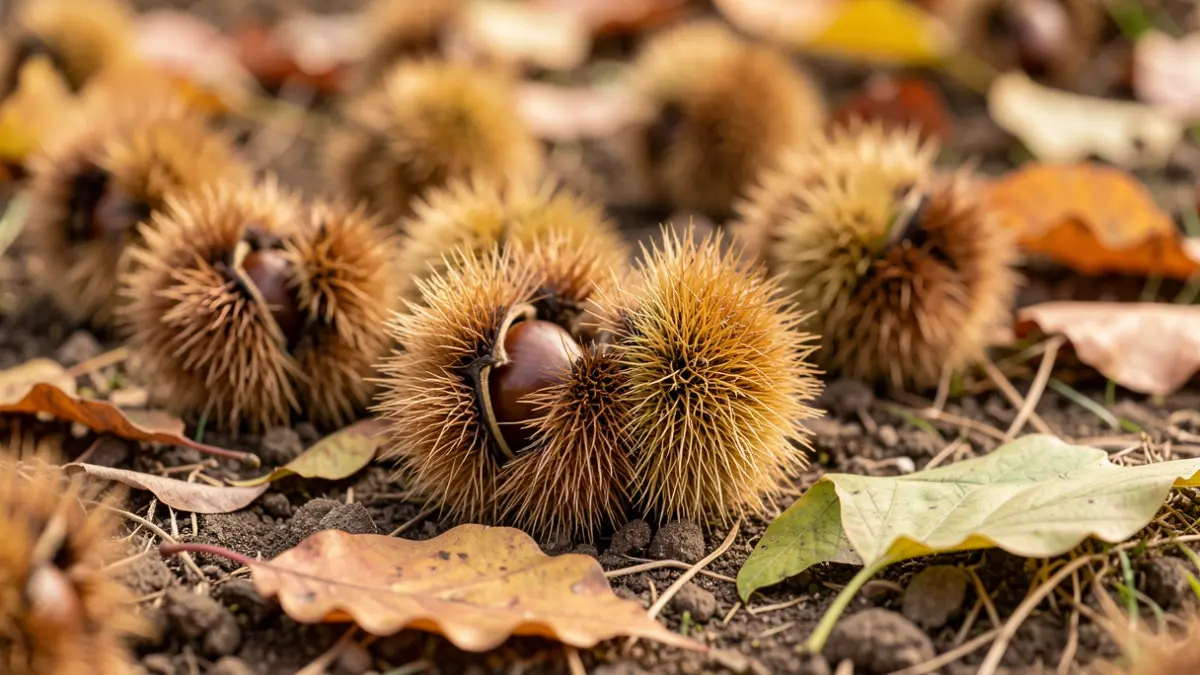
The prevention of chestnut rot begins after the harvest. The RefCast – Portuguese Chestnut Association recommends that producers collect and remove burrs remaining on the ground to reduce the risk of spreading the fungus responsible for this disease and protect next year's production.
Burrs left on the ground can harbor the fungus Gnomoniopsis, responsible for chestnut rot, serving as a source of infection for the following season. During flowering, spores can disperse and infect the female flowers of the chestnut tree, compromising the quality of future production.
The association advises that burrs be collected and removed as quickly as possible, preferably before the total leaf fall. This way, burrs can be separated from leaves, allowing the leaves to remain on the ground and contribute to soil organic matter.
As an alternative, the Eurocastanea protocol also mentions the possibility of spraying soil residues with a 5% urea solution to promote their decomposition. Adopting these preventive measures is crucial to reduce disease risk and contribute to the protection and quality of the next chestnut harvest.