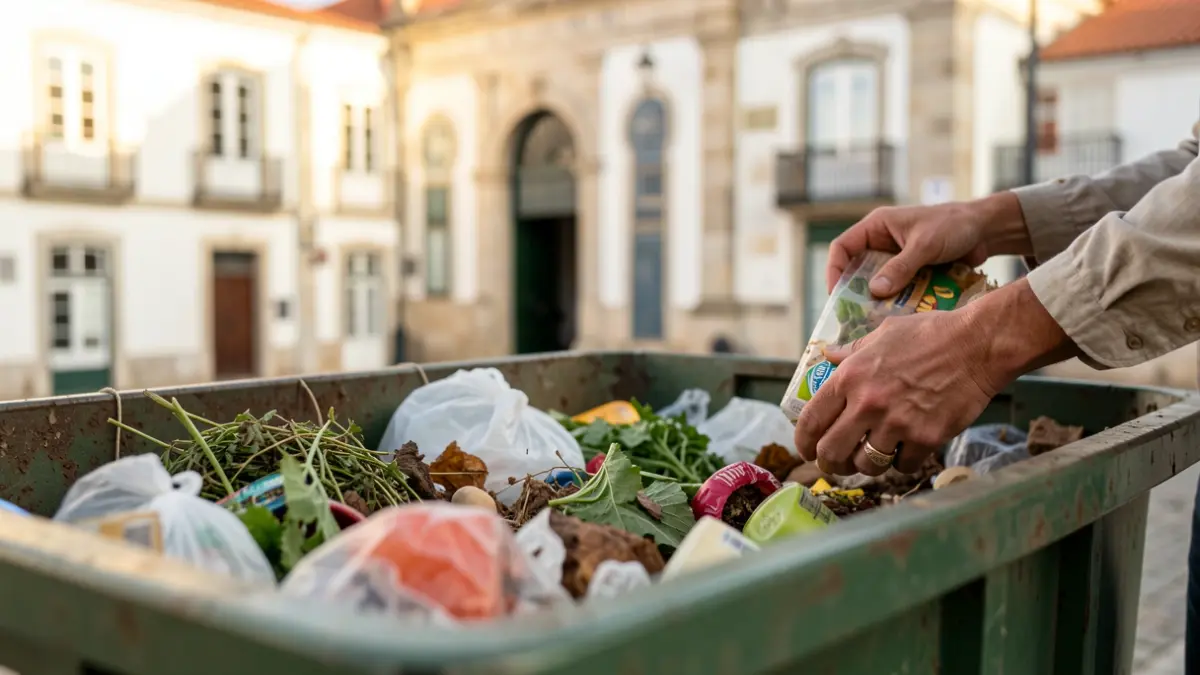
The Municipality of Fornos de Algodres has achieved a nationally significant result in biowaste management, recording a 41% capture rate. This performance, published in the 2025 Annual Report on Urban Waste by the Portuguese Environment Agency, places the municipality among the nine municipalities in mainland Portugal with rates between 31% and 45%, the highest tier presented in the report. The result reinforces Fornos de Algodres' position as a regional benchmark in biowaste management and valorization, particularly within the Intermunicipal Community of the Beiras and Serra da Estrela Region (CIM-RBSE).
This indicator, which corresponds to the amount of biowaste channeled through selective collection and source recycling, is substantially higher than in most Portuguese municipalities. The achievement is the result of consistent work initiated in October 2023 with a pilot project in the Parish of Muxagata and the Bairro das Capelas, which allowed for testing the door-to-door collection model and preparing for its progressive expansion. The municipal strategy has prioritized proximity, awareness-raising, and environmental education, demonstrating that a low-density territory can achieve benchmark results through planning, technical support, and community participation.
The Municipality acknowledges the involvement of the Presidents of the Parish Councils, families, the school community, institutions, businesses, and other waste producers. The work carried out falls under Axis 3 – More Resilient Municipality of the Municipal Development Strategy, specifically within the Municipal Circular Economy Program. The 41% capture rate has enabled compliance with the targets set for 2025 in its PERSU 2030, confirming the effectiveness of the implemented measures.
As a consequence of this compliance, the Municipality will benefit in 2027 from a bonus of 5 euros per ton of waste, resulting in both environmental and financial gains. The municipal strategy includes continuing public training and awareness campaigns, expanding selective biowaste collection to the remaining parishes, and continuously monitoring measures and targets. This policy aligns with circular economy principles and national and European guidelines, contributing to the Sustainable Development Goals (SDGs 11, 12, and 13).
The achieved result is a source of satisfaction and an increased responsibility. The Municipality will continue to work towards expanding selective collection, improving the quantity and quality of collected biowaste, and engaging more people in this collective commitment, as the sustainable future of Fornos de Algodres is built with everyone's participation.