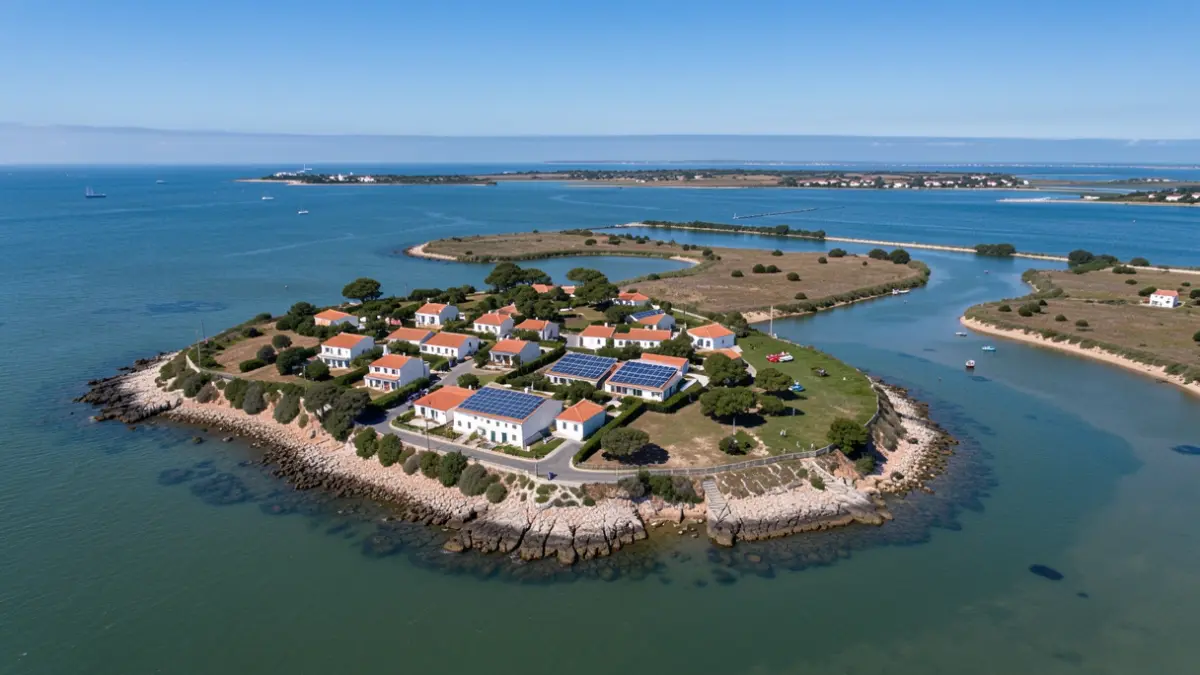
A new article, titled "Implementing a citizen-led renewable energy community on a peripheral island: Challenges, responses and lessons from Culatra, Portugal", has been recently published by CIMA researchers Jóni Santos and André Pacheco, in collaboration with Jânio Ferreira Monteiro. The study examines the journey of the Culatra Renewable Energy Community, from its conception with the local population to its initial operational steps, identifying the regulatory, technical, economic, and social obstacles inherent in its implementation.
The research demonstrates that the energy transition goes beyond the mere installation of solar panels. Active community involvement, the development of sustainable governance models, and the integration of advanced energy management technologies are crucial for adapting solutions to the specific conditions and needs of each locality.
With an estimated photovoltaic solar power of approximately 294 kWp, considering existing and future installations, simulations indicate that it is possible to meet over 70% of local electricity needs during solar production hours. These results underscore the potential of renewable energy communities to drive a participatory energy transition.
The study is part of the research developed at CIMA, particularly within the SMART and DTCoastGrid projects, which combine renewable energy communities, digitalization, smart energy management, and digital twin technologies.
The article has been published in the journal Smart Energy and is available in open access.