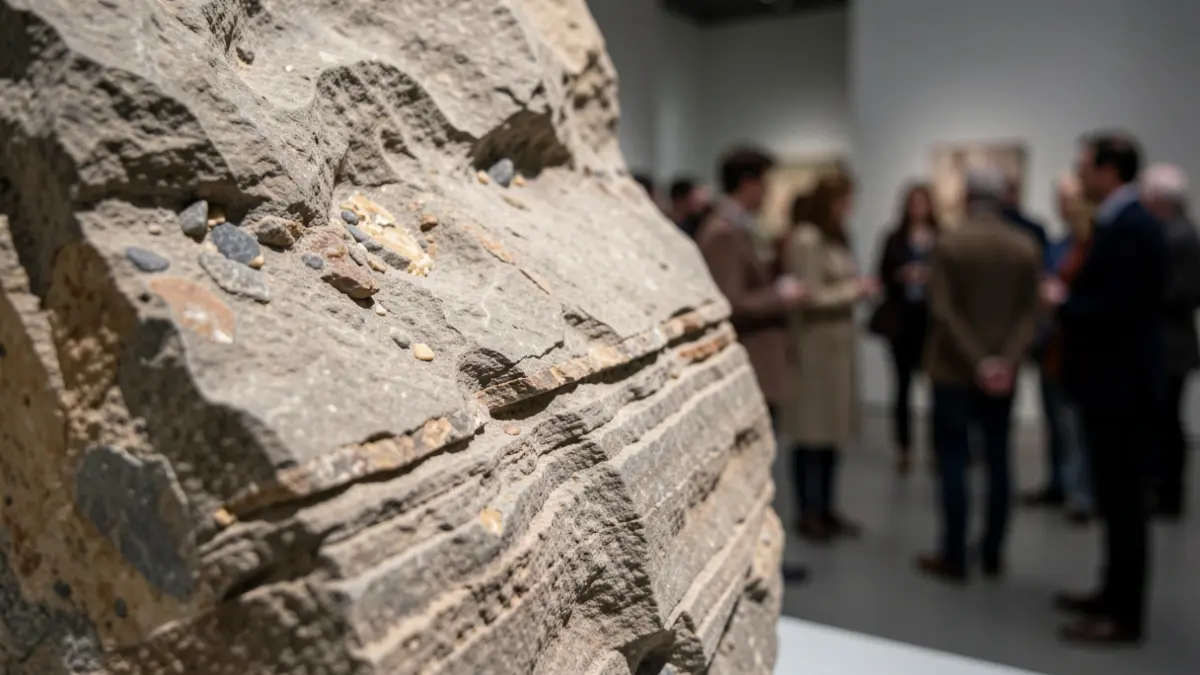
The exhibition uses stone as a starting point to reflect on the passage of time, memory, and the transformation of places, featuring works that combine techniques such as print transfer, graphite drawing, charcoal, acrylic paint, and oil pastel on paper.
Among the pieces are two drawings created from EDIA's orthophotomaps and photographic montages showing the location of the old and current village of Luz. This connection to Luz and the territorial changes caused by Alqueva gives the exhibition a particular dimension for the museum.
The exhibition examines stone as a material that preserves traces of time and changes in locations, exploring its condition from raw material to its presence in inhabited spaces. Memory, forgetting, permanence, and change are central themes in the reflection on what time transforms and what it leaves behind.
The title "(all a) STONE OF TIME" hints at this approach, in a wordplay that links stone and time, inviting an observation of matter as a witness to the transformations of the landscape and human life.