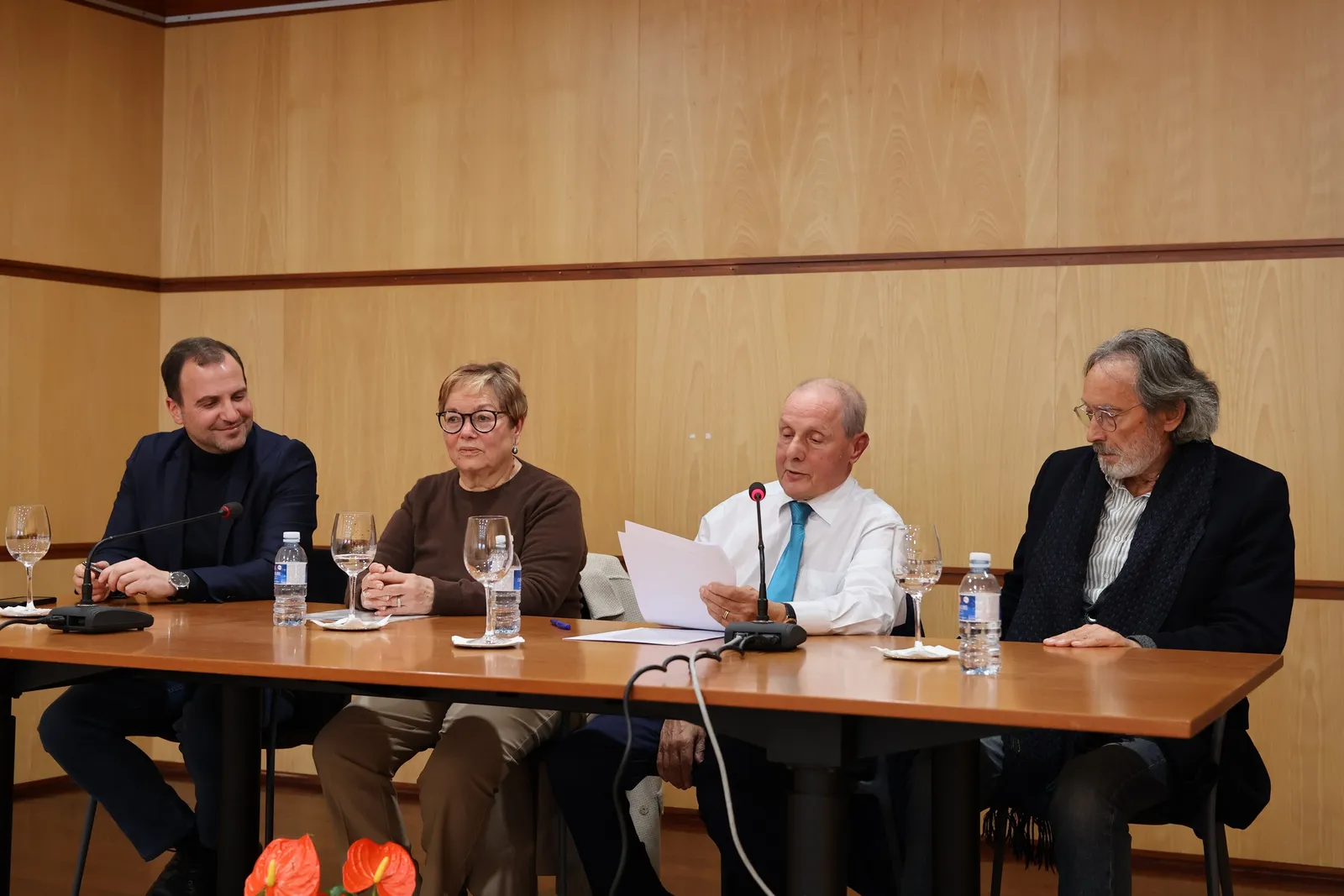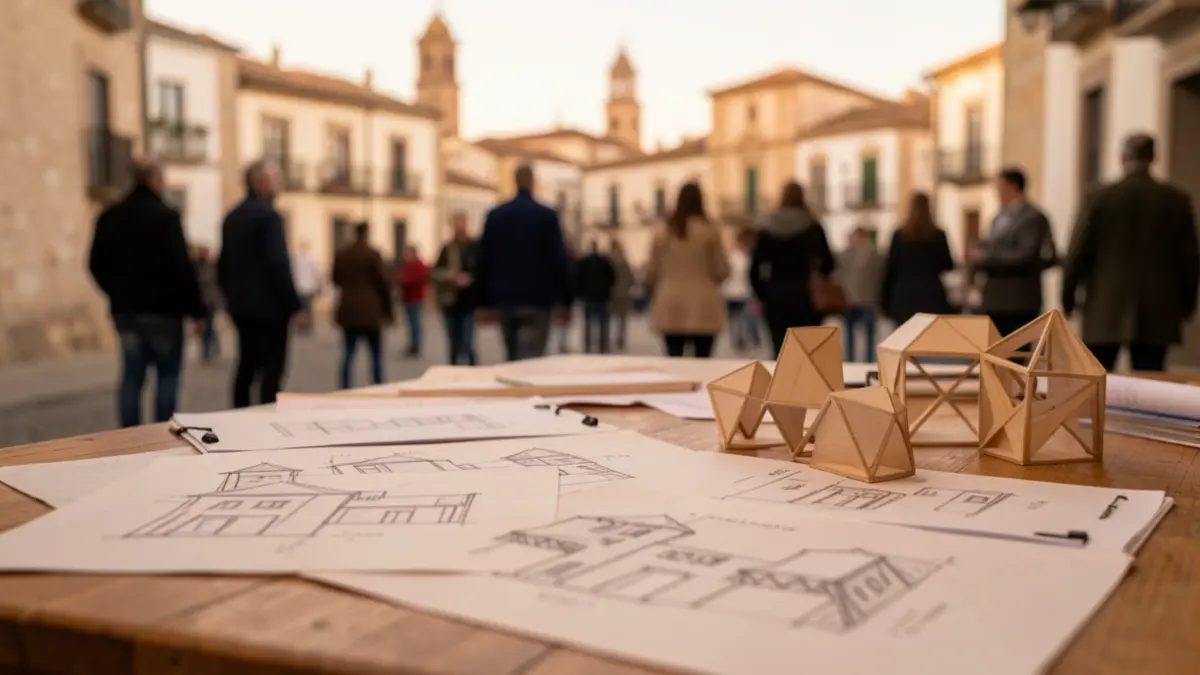
The exhibition, marking the academic farewell of Professor Maria Céu Tereno, presents a significant collection of exercises, drawings, and models developed with students over recent years. The works reflect her continuous pedagogical practice and the strong interdisciplinary dimension of her teaching career, particularly her fruitful dialogue with Drawing-related courses.
The exhibition celebrates a teaching approach that combines technical rigor, artistic sensitivity, and attention to urban space. The presented works showcase processes of observation, analysis, and construction cultivated under Professor Maria Céu Tereno's guidance, highlighting the importance of drawing and geometry in architectural education.
Within the scope of the courses Introduction to Drawing II, with Professors Gonçalo Jardim and Vitor Gomes, and Descriptive Geometry II, students focused on observing, drawing, and constructing geometric models, exploring the urban space and emblematic buildings of Évora. Although some drawings depict architectural spaces from other cities, these works reflect the learning consolidated from observing and experiencing Évora's urban environment.
Through drawing and the creation of geometric models, students analyzed the city, interpreting its urban space and emblematic buildings. The presented works reveal processes of observation, interpretation, and transformation, where the city becomes an object of study and poetic material, converted into graphic, spatial, and structural narratives.
The exhibited models are not merely physical representations; they are records of experiences and gestures of reading the city, and stories that span generations. Drawing—as an art of observing, measuring, and understanding—plays a fundamental role here in constructing a critical and sensitive perspective on urban space.