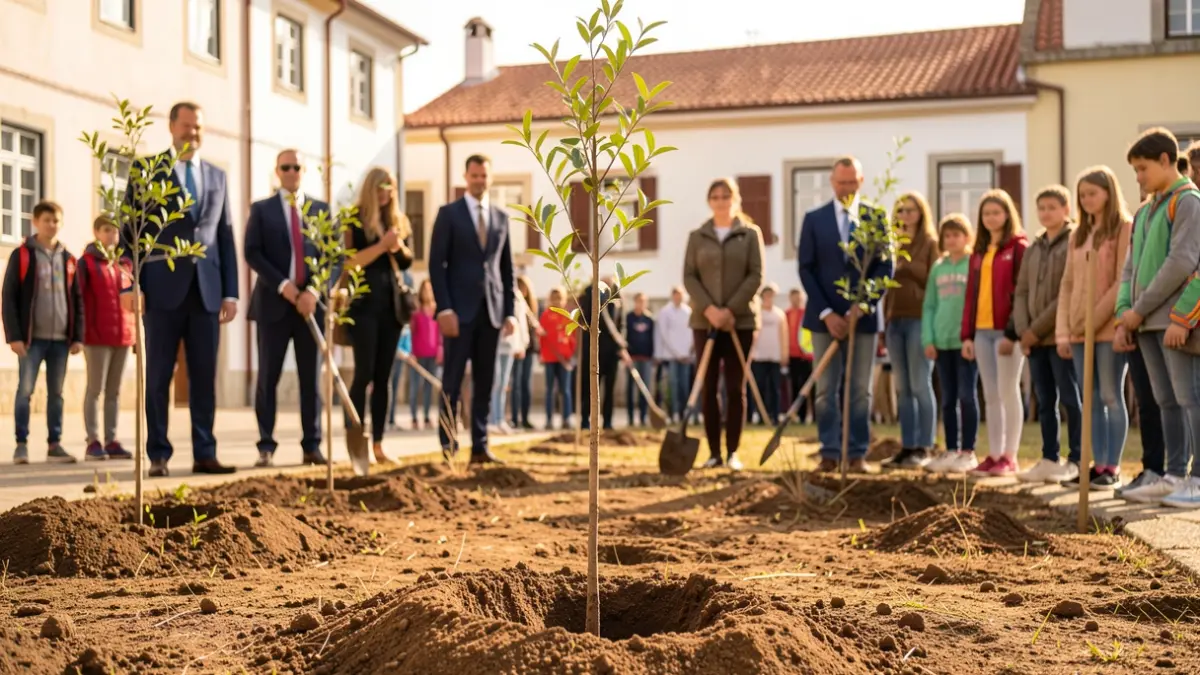
The launch, attended by various local entities including the Mayor of Coimbra, Ana Abrunhosa, marked the beginning of planting approximately 280 trees in the future Taveiro forest. The initiative involved students, teachers, municipal technicians, and the educational community.
Ana Abrunhosa highlighted the importance of bringing municipal climate policy closer to schools, educating citizens, and increasing the city's tree cover. "The idea is to reach the places where we live, where we learn, where we work, and choosing schools is an excellent choice because it is here that we instill values for life and form citizens," she stated.
The first phase of the project covers four schools – Dinis, Ceira, Martim de Freitas, and Taveiro – with a potential intervention area of approximately 42,460 square meters. It is planned to plant 1,415 trees and 2,000 shrubs, with future adjustments based on the validation of plantable areas and selected species.
The project aims to create small school ecosystems to improve shading, thermal comfort, and enhance biodiversity. The director of the Agrupamento de Escolas Coimbra Oeste, Ermelinda Cruz, emphasized the educational dimension, describing the forest as "a true open-air classroom".
The Municipal Network of School Climate Forests is expected to expand by 2030, reaching 16 schools and involving over eight thousand students, with the planting of around five thousand trees and shrubs. The project includes monitoring mechanisms, such as the "Zero Point of the Forest" in Taveiro, with annual photographic records.
Integrated into Coimbra's Municipal Climate Action Plan and the "Coimbra Embraces Biodiversity" initiative, the project links climate adaptation, green infrastructure, environmental education, and citizen science, also benefiting from the Common Forest Program 2026-2027.