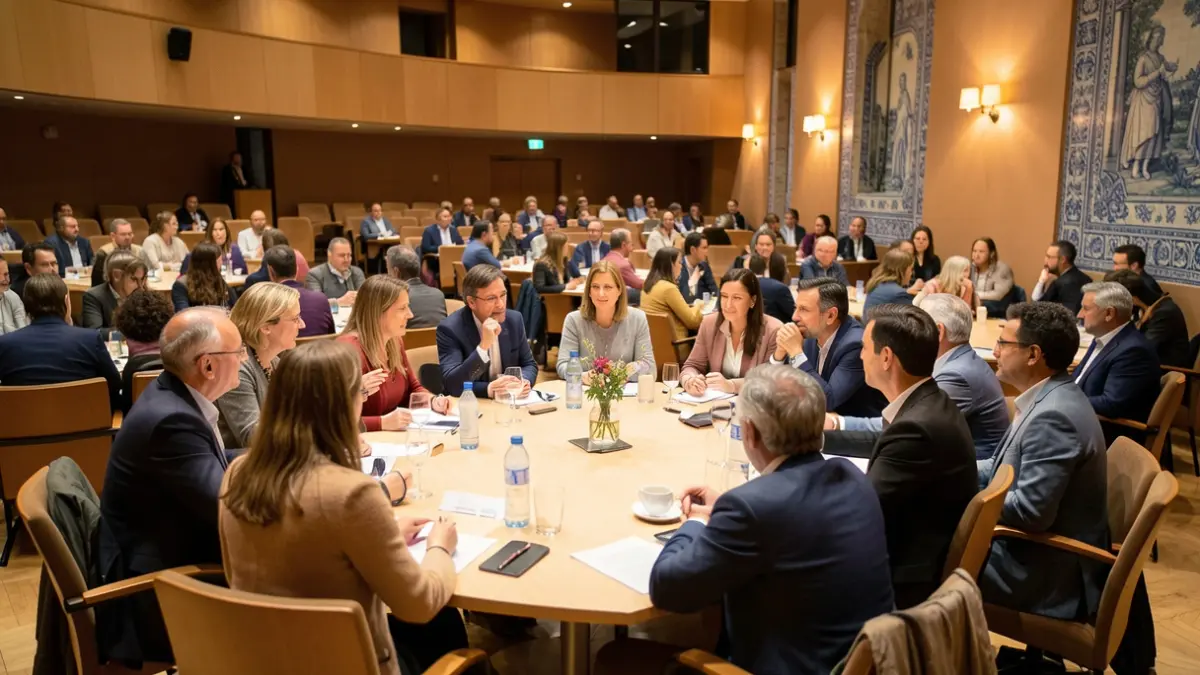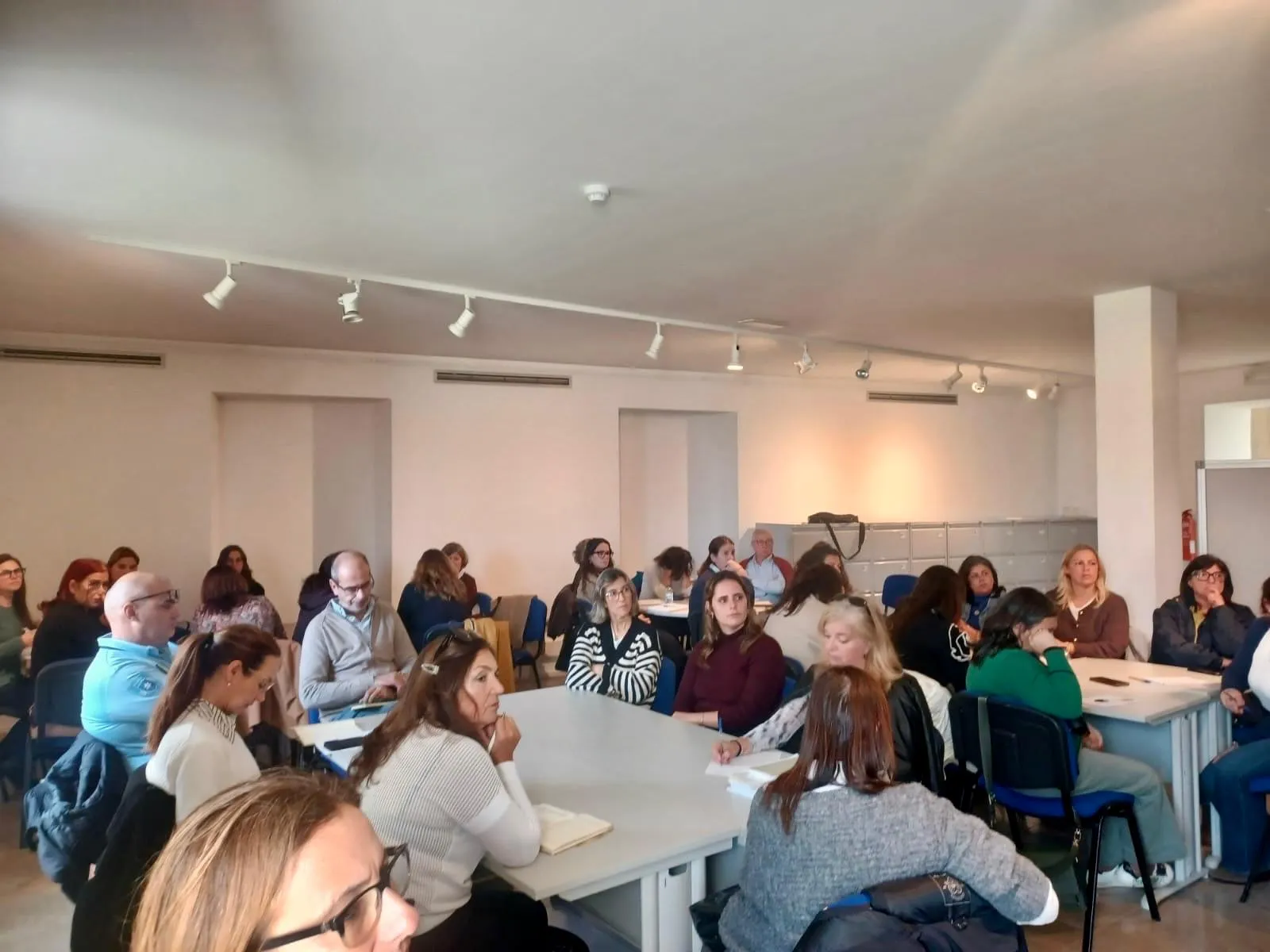
The meeting included representatives from the Social Network, public entities, associations, the gypsy community, and social inclusion specialists. The main objective was to deepen the diagnosis of the needs, challenges, and potential of the gypsy communities in the municipality, aiming to build a participatory plan aligned with national and European guidelines.
Dr. Liliana José Moreira, from the ROMA team of the Agency for Integration, Migrations and Asylum (AIMA), shared strategic references, studies, and relevant best practices for the PLICC revision process.
The morning session was directed at a restricted group, including partners from the Executive Nucleus of the Local Social Action Council and the associations Letras Nómadas and Ribaltambição, allowing for a deeper reflection on challenges and opportunities.
In the afternoon, the session was extended to other partners of the Local Social Action Council (CLAS), facilitated by Maria José Vicente and Susana Lima, representatives of EAPN Portugal. Using participatory methodologies, participants discussed areas such as education, employment, health, housing, discrimination, and civic participation, identifying priorities to improve living conditions and strengthen inclusion.
The Municipality of Figueira da Foz thanked all partners for their commitment and contributions to this collaborative process, which are considered fundamental for developing more adequate, inclusive, and sustainable responses for the territory.